

From Tissue Expander to Implant: The Exchange Surgery and Recovery

Updated: Oct 3
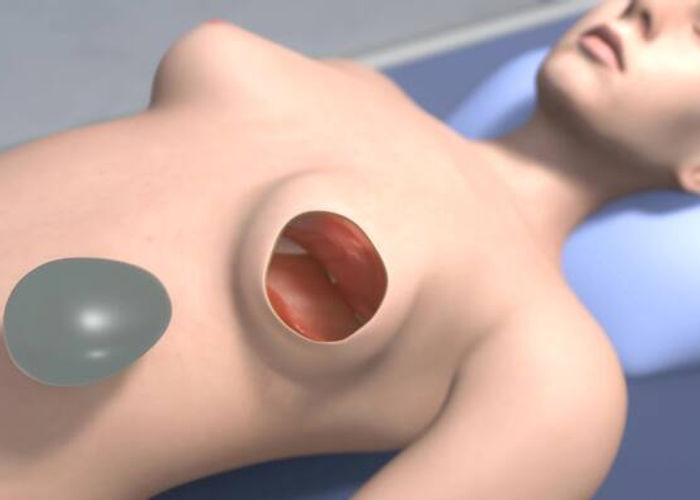
At the exchange surgery, your surgeon removes the temporary tissue expander and places the permanent breast implant. The operation is done under general anesthesia and usually takes 1 to 2 hours. Most women go home the same day. Recovery is milder than after the first operation: most women are back at desk work in 2 to 3 weeks and can exercise again after 4 to 6 weeks.
Preparing for your exchange operation? Explore the free breast reconstruction courses and discuss the recovery instructions that apply to your own operation.
The three steps at a glance
Step 1 – Expander. After the mastectomy, a temporary expander is placed above or below the chest muscle. In the months that follow, it is filled step by step with saline through a small port, until the skin has stretched enough.
Step 2 – Exchange surgery. Once expansion is complete and the tissues have healed, the expander is removed through the same scar. The surgeon adjusts the pocket if needed and places the permanent implant.
Step 3 – Implant. The soft, shaped implant stays in place. Over the following 2 to 3 months the swelling settles and the breast takes its final shape.
Video: from tissue expander to implant
This animation shows the staged reconstruction, including the change from a temporary expander to an implant. Your operation and recovery plan may differ from the example shown.
In this article
Why a second operation is needed
In two-stage implant reconstruction, the expander is a temporary device. Its job is to make space for the implant. It creates a pocket and stretches the skin and, in some techniques, the chest muscle.
An expander is firmer than a final implant. It often feels tight, and it is not shaped for long-term comfort. The second operation exchanges this temporary device for the soft, shaped permanent implant.
Wondering about pain, the filling visits, or how long the expander stays in? Read more about tissue expander pain, filling and common problems.
When does the expander exchange take place?
There is no fixed date that fits everyone. In many treatment plans the exchange takes place about 1 to 3 months after the last fill. That is a usual range, not a rule. Your team sets the moment for you, based on three things:
Expansion is complete. The expander has reached the planned volume and the skin has stretched enough.
Healing. The scars and the skin over the expander are calm and well healed. The pocket has had time to settle.
Other cancer treatment. Chemotherapy is finished. After radiotherapy, the team usually waits until the skin has recovered from the radiation. That can take several months.
So finishing the fills does not automatically mean you are ready for surgery. Ask your surgeon when the exchange fits into your treatment plan.
What else can be adjusted during the exchange surgery?
The exchange is more than a simple swap. While the expander is out, the surgeon can refine the result. Your treatment plan may include one or more of these steps:
Adjusting the capsule (capsulotomy). Your body forms a thin layer of scar tissue around the expander. The surgeon can loosen or reshape this layer so the implant sits in the right place.
Adjusting the pocket. The pocket can be made larger, smaller or lower, so the implant matches the position of the other breast.
Fat grafting (lipofilling). Small amounts of your own fat, taken from the belly or thighs, are injected under the skin. This softens the upper edge of the implant and hides visible edges.
Symmetry of the other breast. In a one-sided reconstruction, the other breast can be lifted, reduced or enlarged in the same operation.
Scar revision. Old scars can be tidied up while the surgeon is working along the same line.
Not every woman needs all of these steps. Ask your surgeon which ones are part of your plan and what they mean for your recovery.
Choosing the implant – and the Becker expander
In the weeks before surgery, your surgeon chooses the implant. The final expander volume, the position of your scars and your own wishes all play a role. Implants differ in size, shape (round or teardrop) and surface. Your surgeon will explain which type suits your body.
Some women hear about a Becker expander, also called a permanent expander-implant. This device is an expander and an implant in one. It has an outer layer of silicone gel and an inner chamber that is filled with saline through a small port. Once filling is complete, the port is removed in a minor procedure and the device stays in place as the final implant. A second exchange operation is then not needed. Whether this option suits you depends on your body, your treatment and your wishes. Ask your surgeon about the advantages and disadvantages in your situation.
The tissue expander to implant operation itself
The exchange is done under general anesthesia and usually takes 1 to 2 hours. Compared with the first operation, it is shorter and less invasive. During the operation your surgeon:
Removes the expander through the same incision that was used to place it. No new scars are needed.
Adjusts the capsule and the pocket so the implant sits exactly where it should.
Places the permanent implant in the pocket and checks its position and shape.
Adds fat grafting or a procedure on the other breast if this is part of your plan.
Closes the incision carefully along the original line, so the final scar stays as discreet as possible.
Most women go home the same day. Some surgeons prefer one night in hospital, especially when fat grafting is done.
Tissue expander exchange surgery recovery time, week by week
Most women find the exchange milder than the first operation. The usual feeling is soreness, tightness and pressure rather than sharp pain. Recovery depends partly on whether the expander was above or below the muscle, and on any extra steps such as fat grafting.
Week 1: rest and let the swelling settle
Expect moderate soreness, a tight feeling across the chest and some swelling. Sleep on your back, slightly propped up. Do not lift anything heavier than about 2 kg (5 pounds) and keep your arms below shoulder level. Wear the surgical bra day and night. Most women need pain medication for 3 to 5 days. If drains were placed, they are removed at a follow-up visit once the fluid output drops. Areas where fat was taken can be bruised and sore.
Week 2–3: back to daily life
The discomfort fades noticeably. Most women can drive again, return to desk work and do light housework. You will still feel tightness, especially when reaching up.
Week 4–6: back to exercise
Light exercise is possible again: walking, gentle yoga, easy cycling. Avoid heavy lifting and hard chest exercises for the full 4 to 6 weeks. The implant settles into its final position in this period.
Months 2–3: the final result
The swelling is gone, the implant softens in the pocket and the breast reaches its final shape. Many women say this is the moment they recognize themselves again.
Risks and complications
The exchange is a smaller operation, but every operation has risks. Possible problems are bleeding, infection, a fluid collection (seroma), wound-healing problems and a shift of the implant. Later on, the capsule around the implant can tighten (capsular contracture). After radiotherapy, the risk of complications is higher, and your surgeon may also discuss reconstruction with your own tissue. Contact your team if you notice fever, increasing redness or swelling, or pain that gets worse.
Frequently asked questions
How long can a tissue expander be left in?
There is no strict maximum. An expander usually stays in for a few months, until expansion is complete and any other cancer treatment is finished. It can stay in longer if you have chemotherapy or radiotherapy. It is a temporary device that feels firm, so most women want the exchange as soon as it is safe. Your surgeon sets the moment for you.
What is the recovery time after expander exchange surgery?
Most women need pain medication for 3 to 5 days. After 2 to 3 weeks they can drive and do desk work again. After 4 to 6 weeks light exercise is possible. The final result shows after 2 to 3 months. Extra steps such as fat grafting can add a little recovery time.
Will I have drains?
Not always. Some surgeons place a drain for a few days, especially when the pocket has been adjusted. If you have a drain, it is removed at a follow-up visit once the fluid output is low. Ask your surgeon what is usual in your case.
Is fat grafting done at the same time?
It can be. Fat grafting (lipofilling) during the exchange softens the upper edge of the implant and hides visible edges. It adds little recovery time. Whether it is planned depends on your body and your wishes.
What is a Becker expander?
A Becker expander is a permanent expander-implant. After placement it is filled with saline through a small port. Once the volume is right, the port is removed and the device stays in place as the final implant. A second exchange operation is then not needed.
How painful is the exchange surgery?
Most women find it milder than the first operation. The usual feeling is soreness, tightness and pressure rather than sharp pain. Prescription pain medication is usually needed for only a few days.
When does the exchange take place after expansion is complete?
Often 1 to 3 months after the last fill, but the moment is set per patient. Healing, chemotherapy and radiotherapy all play a role. After radiotherapy the team usually waits until the skin has recovered.
How long does the surgery take and will I stay overnight?
The exchange usually takes 1 to 2 hours. Most women go home the same day. Some surgeons prefer one night in hospital, especially when fat grafting is done.
Questions to ask your surgeon
When will my exchange take place, and what does that depend on in my case?
Will I get drains, and for how long?
Will lipofilling be done at the same time?
Will the capsule or the pocket be adjusted, and is anything planned for my other breast?
What does all of this mean for my recovery and my return to work?
Related articles
Written by Dr. Mahyar Foumani, plastic and reconstructive surgeon specializing in breast reconstruction. Based on the book 'Breast Reconstruction Explained.'
This article is education, not medical advice
This article explains in plain words how breast reconstruction works. It is meant to help you understand what is possible, so that you and your doctor can make a good decision together. It does not replace personal medical advice.
Every situation is different. What is best for you depends on your body, your illness, your treatment and your own wishes. So always follow the advice of your own doctor or care team. Do you have symptoms, or are you unsure about something? Please contact your doctor or GP. In an emergency, call your local emergency number.
Continue reading


Comments