

Latissimus Dorsi (LD) Flap Breast Reconstruction: How It Works, Scars, Recovery

Updated: Sep 11
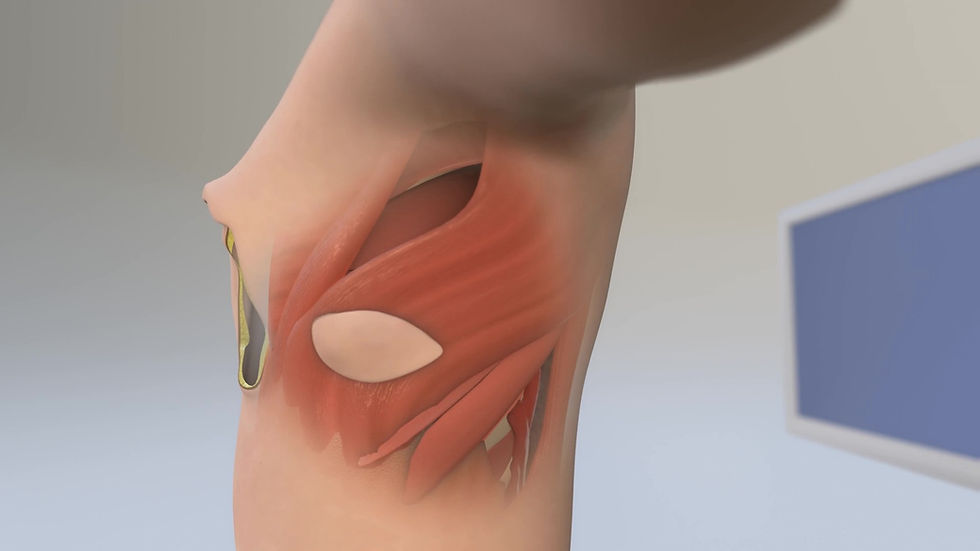
A latissimus dorsi (LD) flap, also called a lat flap, rebuilds the breast with skin, fat and muscle from your upper back. The tissue is turned under the armpit to the chest and stays connected to its own blood vessels. It is often combined with an implant for volume. The LD flap is a reliable option after radiotherapy, after a failed implant reconstruction, or when there is not enough belly tissue for a DIEP flap. This article explains how it works, what the scars look like, and what recovery involves.
The animation shows how the latissimus dorsi flap is moved from the back to the chest. The exact steps can differ per hospital and per patient.
In this article
What is a latissimus dorsi flap?
The latissimus dorsi is a large, flat muscle on your back. It runs from the spine to under the arm and helps you pull and rotate the arm. Other muscles in the back and shoulder can take over most of this work. That is why a surgeon can move part of this muscle safely, without major problems for most women.
In a latissimus dorsi flap breast reconstruction, the surgeon takes a part of this muscle, together with a patch of skin and fat on top. This piece of tissue is called a flap. The flap is turned through a tunnel under the skin of the armpit to the chest. There it is shaped into a breast.
The blood supply comes from the thoracodorsal vessels, which run from the armpit. These vessels stay connected during the whole operation. This makes the LD flap a pedicled flap. The surgeon does not need to reconnect tiny blood vessels under a microscope. That is the main reason the LD flap is so reliable, and a clear difference from free flaps such as the DIEP flap.
Who is an LD flap for?
The LD flap can be a good option if:
You have had radiotherapy to the chest. The flap brings healthy, well-supplied skin and muscle to the radiated area.
An implant reconstruction has failed or gives problems, such as a hard capsule, infection or thin skin. The flap can cover a new implant or replace it.
You do not have enough belly tissue for a DIEP flap, or you have had belly surgery that rules out a belly flap.
You want your own tissue but prefer a shorter operation than microsurgery.
You need a partial reconstruction after a breast-conserving operation, to fill a dent in the outer part of the breast.
The LD flap may be less suitable if you have had earlier back surgery, if the thoracodorsal vessels were damaged during an armpit operation, if you rely heavily on the back muscle for sport or work, or if you have very little back tissue. Your surgeon will check your back and armpit before advising.
LD flap with or without implant
The back has less fat than the belly. For most women, the LD flap alone does not give enough volume for the full breast. There are three ways to solve this.
LD flap with implant
This is the most common form. The surgeon places a breast implant under the flap. The flap gives a natural, soft cover with good blood supply. The implant gives the volume. Compared with an implant alone, the result looks and ages more naturally, with fewer visible edges and less rippling. Sometimes a tissue expander is used first, so the size can be adjusted over time. Read more in our tissue expander breast reconstruction guide.
Extended LD flap without implant
The extended LD flap takes extra fat from the back and the side. This can give enough volume for a small to medium breast, without an implant. It suits women with enough back tissue or who are happy with a smaller breast. If more volume is wanted later, fat grafting (lipofilling) can add it step by step.
Mini-LD flap
The mini-LD flap uses a smaller piece of muscle and fat. It is used to fill a dent after a breast-conserving operation, or to correct a shape problem after earlier surgery. The effect on the back is smaller.
Latissimus dorsi flap technique step by step
For one breast, the operation usually takes 3 to 4 hours under general anaesthetic. This is the general order of the latissimus dorsi flap technique:
Planning while you stand. The surgeon marks the breast area on your chest and the patch of skin on your back. The back patch is planned so that the scar can hide under a bra strap.
Harvesting the flap. You lie on your side or front. The surgeon makes the cut on your back, finds the muscle and its blood vessels, and frees a part of the muscle with the skin and fat on top. The blood vessels stay intact.
Tunnelling to the chest. The flap is turned through a tunnel under the skin of the armpit, from the back to the chest. The blood supply stays connected the whole time.
Shaping the breast. You are turned onto your back. The surgeon shapes the flap into a breast mound. If needed, an implant or tissue expander is placed under the flap. The surgeon may also cut the nerve to the muscle, to prevent the breast from moving when you tense the muscle.
Closing. The back and the chest are closed. Thin drains are placed at both sites to remove fluid during the first weeks.
Sometimes only the muscle and fat are taken, without a skin patch (muscle-sparing or skin-sparing versions). This is possible when enough breast skin was kept at the mastectomy. Your surgeon will explain which version fits your situation.
The back scar and shoulder function
What does the back scar look like?
A scar on the back cannot be avoided. It is usually a flat or slightly diagonal line across the upper back, placed so that it hides under a bra strap or swimsuit. The skin on the back can feel tight or numb for a while. The scar is red and firm in the first months. It fades a lot over 12 to 18 months. If you often wear backless clothing, think about how you feel about a scar there and discuss the position with your surgeon.
Will my shoulder and arm work normally?
Most women regain very good shoulder function. Other muscles take over the work of the latissimus dorsi. Some women notice mild weakness when pulling, climbing or pushing themselves up from a chair. This is usually small and improves with exercise. People who use this muscle a lot, such as rowers, climbers, swimmers or wheelchair users, may notice a bigger difference. Tell your surgeon if this applies to you.
Physiotherapy usually starts 2 to 4 weeks after surgery. It helps to restore movement and strength in the shoulder and arm. A stiff shoulder is common in the first weeks; regular gentle exercises prevent it from lasting.
Recovery after latissimus dorsi flap surgery
The hospital stay is usually 1 to 3 days. Drains stay in at the back and the breast for 7 to 14 days. In the first 3 to 4 weeks, avoid reaching overhead and heavy lifting, to protect the healing tissue. This is a rough overview:
Week 1 to 2: rest, drains, walking around the house. Light daily tasks return around week 2.
Week 3 to 6: physiotherapy starts. Desk work and non-strenuous work return by weeks 4 to 6.
Week 7 to 12: harder physical activity returns step by step.
Month 3 to 6: full activity, including sport. Scars keep fading for a year or longer.
For a detailed timeline, read our article Latissimus dorsi flap recovery week by week.
LD flap vs DIEP flap vs implant
There is no single best method. Each option fits a different body, treatment history and wish.
LD flap vs DIEP flap
Both use your own tissue. The DIEP flap takes skin and fat from the belly. It is a free flap, so the blood vessels are reconnected under a microscope. It can rebuild a full breast without an implant and gives a flatter belly, but the operation is longer (4 to 8 hours) and recovery takes more time. The LD flap takes back tissue and keeps its blood supply. The operation is shorter (3 to 4 hours), the risk of flap failure is very low, and more hospitals can offer it. But it usually needs an implant for volume, and it leaves a scar on the back.
LD flap vs implant alone
An implant alone is the shortest operation with no extra scars. It works well when the skin is healthy and no radiotherapy is planned. After radiotherapy, an implant alone has a higher chance of hard capsule, infection and thin skin. The LD flap with implant adds a layer of healthy muscle and fat over the implant. This lowers those problems and gives a more natural look, at the cost of a longer operation and a back scar.
Read more: Breast implant or DIEP flap? An honest comparison and How radiation therapy affects your breast reconstruction options.
Risks of a latissimus dorsi flap
The LD flap is one of the safest flaps, but every operation has risks. Most are treatable and do not affect the final result.
Seroma (fluid in the back)
This is the most common problem after an LD flap. After the muscle is removed, a space stays behind in the back. Fluid can collect there, even after the drains are out. You then feel a soft swelling on the back, sometimes with a sloshing feeling. A seroma is not dangerous. It is usually drained with a needle in the clinic, sometimes more than once. Surgeons use stitches, drains and a pressure garment to lower the chance.
Flap problems
Because the blood supply stays connected, complete flap failure is rare. Sometimes a small part of the skin patch does not heal well and needs wound care or a small procedure.
Breast movement (animation)
The moved muscle can still contract when you use your arm. The breast then moves or changes shape. The surgeon can prevent this by cutting the nerve to the muscle during the operation. If it happens anyway, it can be treated later with a small procedure or botulinum toxin injections.
Implant-related risks
If an implant is used, the usual implant points apply: hard scar tissue around the implant (capsular contracture), rupture, and replacement after 10 to 20 years. The flap cover lowers, but does not remove, these risks.
Other risks
Infection, bleeding, wound healing problems at the back or chest, a stiff shoulder, and numbness of the back skin. Contact your team if you notice fever, increasing redness or pain, or a fast-growing swelling.
Frequently asked questions about the LD flap
What is a latissimus dorsi flap?
A latissimus dorsi flap, or lat flap, is a piece of skin, fat and muscle from the upper back. The surgeon turns it under the armpit to the chest to rebuild the breast. The tissue stays connected to its own blood vessels, so no microsurgery is needed. It is often combined with an implant for volume.
What is an LD flap breast reconstruction with implant?
In most LD flap reconstructions, the back tissue alone is not enough for the full breast size. The surgeon places a breast implant, or first a tissue expander, under the flap. The flap gives a natural, well-supplied cover, and the implant gives the volume. This combination is the most common form of LD flap reconstruction.
How long does latissimus flap surgery take?
For one breast, the operation usually takes 3 to 4 hours. That is shorter than a DIEP flap, which needs microsurgery. The hospital stay is often 1 to 3 days. Drains stay in the back and the breast for 7 to 14 days.
Where is the scar after a lat flap?
The back scar is usually a flat or slightly diagonal line on the upper back. The surgeon plans it so that it can hide under a bra strap. On the chest, the scar follows the mastectomy scar or the skin patch from the back. Scars fade a lot over 12 to 18 months.
Will I lose strength in my arm after a latissimus dorsi muscle flap?
Most women notice only mild weakness, if any, when pulling or lifting the arm. Other shoulder muscles take over most of the work. People who rely heavily on this muscle, such as rowers, climbers or swimmers, may notice a bigger difference. Physiotherapy helps to restore movement and strength.
How long is recovery after LD flap reconstruction?
Light daily tasks are possible after about 2 weeks. Desk work returns around weeks 4 to 6. Harder physical activity returns by weeks 8 to 12. Full activity, including sport, takes 3 to 6 months. Avoid reaching overhead and heavy lifting in the first 3 to 4 weeks.
Is an LD flap a good option after radiotherapy?
Yes, it is one of the most used options after radiotherapy. The flap brings healthy, well-supplied skin and muscle to the chest. This is a better base than radiated skin alone, and it lowers the chance of problems with an implant. Your surgeon will check your skin and the blood vessels first.
What is the difference between an LD flap and a DIEP flap?
The LD flap uses back tissue and keeps its blood supply, so the operation is shorter and the risk of flap failure is very low. It usually needs an implant for volume. The DIEP flap uses belly skin and fat, needs microsurgery and a longer operation, but can rebuild a full breast without an implant.
Questions to ask your surgeon
Do I need an implant with the LD flap, or is an extended LD flap without implant possible for me?
Where exactly will the back scar be, and can it be placed under my bra strap?
Will you cut the nerve to the muscle to prevent breast movement?
How do you lower the chance of a seroma in the back, and what happens if I get one?
How will this affect my sport or my work, given how I use my arms?
Open the Breast Reconstruction Decision Guide to explore your options and prepare questions for your treatment team.
Related articles
Written by Dr. Mahyar Foumani, plastic and reconstructive surgeon specializing in breast reconstruction. Based on the book 'Breast Reconstruction Explained.'
This article is education, not medical advice
This article explains in plain words how breast reconstruction works. It is meant to help you understand what is possible, so that you and your doctor can make a good decision together. It does not replace personal medical advice.
Every situation is different. What is best for you depends on your body, your illness, your treatment and your own wishes. So always follow the advice of your own doctor or care team. Do you have symptoms, or are you unsure about something? Please contact your doctor or GP. In an emergency, call your local emergency number.


Comments