

LICAP Flap After Lumpectomy: What It Is, Who It Is For, Scars and Recovery

Updated: Oct 3
What are my options if the shape of my breast changes after a lumpectomy? One option is a LICAP flap. The surgeon moves a piece of skin and fat from the side of your chest, just under the arm, into the gap left by the lumpectomy. The tissue keeps its own blood supply, so the breast keeps its shape without an implant. This article explains what a LICAP flap is, who it suits, where the scars are and how recovery goes.
In this article
What is a LICAP flap?
LICAP stands for lateral intercostal artery perforator. These are small blood vessels that come out between the ribs at the side of the chest, below the armpit. A LICAP flap is a piece of skin and fat from this area. It stays attached to one of these small vessels. The surgeon turns it forward into the breast to fill the gap after the lumpectomy.
Doctors call this partial breast reconstruction, or oncoplastic surgery. Oncoplastic means: removing the cancer and reshaping the breast in one operation. The LICAP flap is a local flap. The tissue comes from right next to the breast. No vessels need to be joined under a microscope, and no muscle is removed.
Larger flaps, such as the DIEP flap from the belly or the latissimus dorsi flap from the back, rebuild a whole breast after a mastectomy. The LICAP flap is different. It is made for partial reconstruction. It is a smaller operation with a faster recovery, and the muscles underneath stay fully intact.
Who is a LICAP flap for?
A LICAP flap can be a good choice if:
Your tumour is in the upper or outer part of the breast, towards the armpit.
You want to keep your breast (breast-conserving surgery) rather than have a mastectomy.
Your breast is small or medium, so moving breast tissue around would not fill the gap.
You want to keep your breast size and do not want the other breast made smaller.
You prefer your own tissue to an implant.
There is enough skin and fat at the side of the chest, under the arm.
The LICAP flap is usually done in the same operation as the lumpectomy. It can also be done later, to correct a dent after an earlier lumpectomy, with or without radiotherapy. Your plastic surgeon looks at where the tumour is, the size of your breast and the tissue at the side of your chest. Together you decide whether this technique fits you.
How is LICAP breast surgery done?

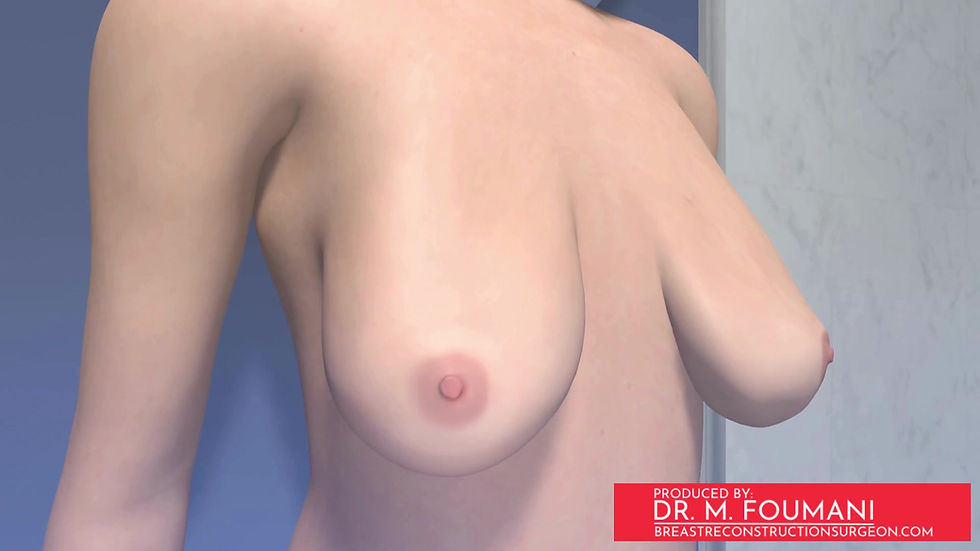
Illustration: the LICAP flap restores the shape of the upper and outer breast with skin and fat taken from the side of the chest, under the arm; the scar lies along the side of the chest in the bra line.
The operation has a few clear steps. It is done under general anaesthesia.
Before the operation, the surgeon finds the best blood vessel with a small ultrasound (Doppler) or a CT scan. The flap is drawn around this vessel.
The breast surgeon removes the tumour with a rim of healthy tissue (a clear margin).
The plastic surgeon frees the flap of skin and fat from the side of the chest. The small vessel stays attached.
The flap is turned forward into the gap in the upper or outer breast. If no extra skin is needed, the top layer of skin is removed and the flap sits fully under the breast skin.
The breast and the donor area are closed. The surgeon shapes the breast so both sides look balanced.
Animation: how the LICAP flap is lifted from the side of the chest and turned into the upper and outer breast, keeping its own blood vessel.
Because the flap keeps its own blood supply, the tissue stays healthy. It feels much like breast tissue, so the result looks and feels natural.
LICAP vs AICAP flap
The LICAP flap and the AICAP flap are close relatives. The difference is where the tissue comes from and which part of the breast it fills. The LICAP flap uses tissue from the side of the chest, under the arm. It fills gaps in the upper and outer breast. The AICAP flap (anterior intercostal artery perforator) uses tissue from just below the breast crease. It fills gaps in the lower and inner breast. Both keep the muscle intact and need no microsurgery. Read more in our article on the AICAP flap after lumpectomy.
Scars after a LICAP flap
You will have two scars, and they are often close together. The lumpectomy scar sits on the breast, where the tumour was removed. The donor scar runs along the side of the chest, under the arm. It usually follows the bra line, so a bra or swimwear covers it. In many women the two scars join into one longer scar that runs from the outer breast towards the back.
Scars are red and firm at first. Over one to two years they become paler and softer. Sun protection helps. Your team may also advise scar massage or silicone tape. The side of the chest may feel tight or numb for a while. This usually improves over the months.
Recovery after a LICAP flap
Recovery after a LICAP flap is faster than after a larger flap operation. Below is what most women notice, phase by phase.
The first days
Most women stay in hospital for one night. You may have a small drain for a short while, to stop fluid building up. The breast and the side of the chest feel swollen, bruised and sore. Standard painkillers usually keep this under control. Your team checks the flap regularly to see that the blood supply is good.
Weeks 1 to 2
You feel tired, and the side of the chest feels tight. Light daily activities are fine. Keep arm movements gentle on the operated side and avoid heavy lifting. Wear a soft, supportive bra day and night if your team advises this. Contact your team if redness spreads, if you have a fever, if the wound opens, or if the flap area turns dark or cold.
Weeks 2 to 6
Most women return to work within about three weeks, depending on how physical the job is. The swelling goes down and the shape of the breast becomes clearer. If you need radiotherapy, it usually starts in this period, once the wounds have healed.
After 6 weeks
Sport and heavy lifting are usually possible again after about six weeks. The final shape takes several months, and longer if you have radiotherapy. A small dent can later be corrected with lipofilling if needed.
LICAP flap and radiotherapy: timing
Many women who have a lumpectomy also need radiotherapy. The LICAP flap is normally done before radiotherapy, in the same operation as the lumpectomy. Radiotherapy can usually start on schedule once the wounds have healed, often a few weeks after surgery. The flap brings in healthy tissue with a good blood supply, which tends to cope well with radiotherapy. Your surgeon and your radiation oncologist plan this together, so your cancer treatment is not delayed.
If you already had radiotherapy and a dent developed later, a LICAP flap is still possible in many cases. Healing is slower in radiated skin, so your surgeon will check the tissue carefully first.
Alternatives to a LICAP flap
A LICAP flap is one of several ways to keep a good breast shape after a lumpectomy:
Rearranging breast tissue: for small gaps in a larger breast, the surgeon moves nearby breast tissue into the gap.
Oncoplastic reduction: for larger breasts, the surgeon removes the tumour as part of a breast reduction. The other breast is often reduced too, for balance. Read more about shape-preserving and oncoplastic techniques.
Lipofilling (fat grafting): the surgeon injects your own fat, taken from the belly or thighs, into a small dent. This often needs two or three sessions and is usually done after radiotherapy. Read more about lipofilling for small breast defects.
AICAP flap: for gaps in the lower and inner breast.
Mastectomy with reconstruction: if the tumour is large compared with the breast.
None of these is best for everyone. The right choice depends on where the tumour is, the size of your breast, your radiotherapy plan and your own wishes.
Frequently asked questions about the LICAP flap
What is LICAP?
LICAP is short for lateral intercostal artery perforator. It is the name of the small blood vessel that feeds the flap. This vessel comes out between the ribs at the side of the chest, below the armpit. Surgeons use the same name for the flap and for the operation.
What is a LICAP flap used for?
A LICAP flap is used to fill a gap in the upper or outer breast after a lumpectomy. It restores the shape of the breast without an implant. It can be done in the same operation as the lumpectomy, or later to correct a dent.
How long is recovery after a LICAP flap?
Most women stay in hospital for one night. Light daily activities are possible within one to two weeks. Most women return to work within about three weeks, depending on their job. Sport and heavy lifting usually wait until six weeks.
LICAP vs AICAP: what is the difference?
Both are local flaps of skin and fat that keep their own blood supply. The LICAP flap comes from the side of the chest and fills the upper and outer breast. The AICAP flap comes from below the breast and fills the lower and inner breast. Neither removes muscle or needs microsurgery.
Where is the scar after LICAP breast surgery?
The donor scar runs along the side of the chest, under the arm. It usually sits in the bra line, so a bra or swimwear covers it. There is also a lumpectomy scar on the breast itself. Both scars fade over one to two years.
Can I have a LICAP flap if I need radiotherapy?
Yes. The LICAP flap is usually done before radiotherapy, together with the lumpectomy. Radiotherapy can normally start once the wounds have healed, often a few weeks after surgery. The flap tissue has a good blood supply and tends to cope well with radiotherapy.
Is a LICAP flap a breast reconstruction?
Yes, it is a form of partial breast reconstruction. Your own breast stays in place. Only the part that was removed is replaced with tissue from the side of the chest. This is different from a full reconstruction after a mastectomy, such as a DIEP flap or an implant.
Questions to ask your surgeon
Why does a LICAP flap suit my tumour and my breast?
What are the alternatives in my case, and what are their pros and cons?
Where exactly will my scars be, and will they show in a bra or swimwear?
How does this operation fit into my radiotherapy plan?
What happens if the tissue does not heal well, or if the margins are not clear?
Related articles
Written by Dr. Mahyar Foumani, plastic and reconstructive surgeon specializing in breast reconstruction. Based on the book 'Breast Reconstruction Explained.'
This article is education, not medical advice
This article explains in plain words how breast reconstruction works. It is meant to help you understand what is possible, so that you and your doctor can make a good decision together. It does not replace personal medical advice.
Every situation is different. What is best for you depends on your body, your illness, your treatment and your own wishes. So always follow the advice of your own doctor or care team. Do you have symptoms, or are you unsure about something? Please contact your doctor or GP. In an emergency, call your local emergency number.
Prepare your next questions
Continue reading


Comments